

Smart Home Installation in Minneapolis and St. Paul
A lot of smart home technology needs nothing more than a free afternoon and a phone app. Some of it needs a licensed electrician, and a fair amount needs one only because of how your house was wired in 1912. That is not a figure of speech here: 68.4% of Minneapolis single-family parcels were built before 1940, and 78.9% before 1950 (City Assessor, 2025 parcel data). Whether a smart switch drops straight into your wall or turns into an afternoon of wiring work is usually decided by the decade your house went up. The most useful thing we can do on this page is tell you honestly which is which, before you buy anything.
Randy’s Electric has been wiring Minneapolis and St. Paul homes since 2002, and we have more than 6,000 Google reviews averaging 4.8 stars. Our electricians install smart switches and dimmers, smart panels and energy monitoring, hardwired doorbells and cameras, lighting control and EV charging, and we handle the wiring underneath when an older home needs that first. Same-day appointments are usually available Monday through Saturday, across the two cities and out through Edina, Minnetonka, Eden Prairie, Maple Grove, Plymouth, Woodbury and Eagan.
Book Now
Smart Home Devices Randy’s Can Install
What you can do yourself, and what needs an electrician
You do not need us for smart speakers, smart plugs, smart bulbs, plug-in cameras, or battery-powered sensors and locks. Anything that plugs into an outlet or screws into a socket is a homeowner project, and we will say so on the phone rather than sending someone out.
A licensed electrician is required for any device wired into your home’s electrical system rather than plugged into it:
- Smart switches, dimmers and fan controls, which connect to line, load, ground and usually a neutral wire
- Smart panels, subpanels and whole-home energy monitoring
- Hardwired video doorbells where the transformer is undersized or absent
- Hardwired cameras, floodlights and security lighting
- Outdoor and landscape lighting circuits, transformers and controls
- New outlets, switch locations or circuits for any of the above
- EV charging and load management
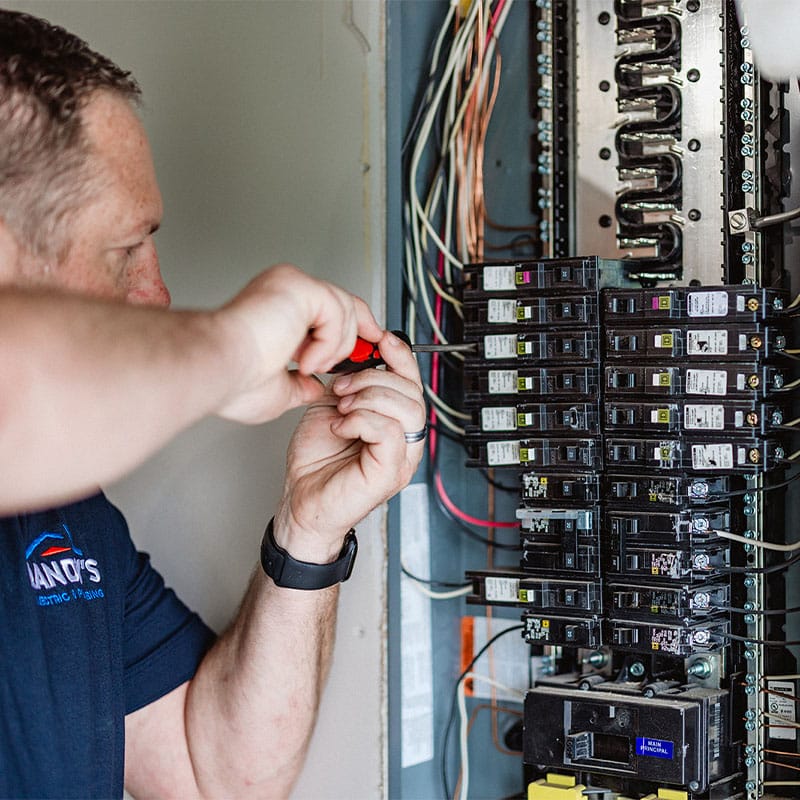
The dividing line is simple: if it involves opening a box, touching the panel or running new cable, it is electrical work, it usually requires a permit, and it should be done by someone licensed. If it plugs in, go ahead.
When the wiring has to come first
Smart devices sit on top of your home’s electrical system and inherit its condition. If a room has ungrounded two-prong outlets, knob and tube wiring, or a switch box with no neutral and no easy path to one, some wiring work comes first. That is not an upsell. It is the reason so many homeowners end up with a drawer of returned devices. The work has value regardless of what you connect to it, too: adding neutrals, grounding circuits and freeing up panel space make the house safer whether you install one smart switch or forty, and in Minneapolis they are the same items a Truth in Sale of Housing evaluator will note when you sell. If you want the whole picture first, an electrical inspection is the right starting point, and electrical wiring services covers the work.
Frequently Asked Questions about Smart Home Installation
Adding smart devices to your home is less about showing off gadgets and more about making your home easier to live in every day. The right setup can simplify routines, add peace of mind, and trim some energy waste.
A few everyday benefits include:
Tell us your smart home goals, and Randy’s can conduct an in-person assessment to help you determine the best upgrades for your home.Not for everything. Smart plugs, smart bulbs, speakers, battery sensors and plug-in cameras are homeowner projects. You need a licensed electrician for anything wired into the house: smart switches and dimmers, smart panels and energy monitoring, hardwired doorbells and cameras, outdoor lighting circuits, and any new outlets or circuits those devices require.
Most often, there is no neutral wire in the switch box. Homes wired before roughly the 1980s frequently used a switch loop, which brings power to the fixture first and leaves the switch box without a neutral. With 68.4% of Minneapolis single-family parcels built before 1940, this is the normal case here rather than the exception. Smart switches need constant power to stay connected. The options are a no-neutral switch, a different approach using smart bulbs, or pulling a neutral to the box. We can tell you which applies once we look inside the box.
A few smart home devices tend to make the biggest difference in energy use. The top two are usually:
Smart plugs have a less dramatic impact, but in homes with lots of “always on” electronics, they can shave a few percent off your total electricity use. Together, many homes experience overall electric bill reductions in the 5–15 percent range, sometimes more in homes that are particularly “tech-heavy” or inefficient.Yes, and we do it constantly, because most of the homes we work in were built well before any of this existed. Older homes sometimes need groundwork first, most commonly a neutral wire pulled to a switch box, a deeper box, a grounded circuit, or panel space. We will tell you what your house needs before you buy anything, which is a much better order to do it in.
Usually, yes. How involved it is depends on where the switch is and what access we have. A first-floor switch with an unfinished basement below or an accessible attic above is straightforward. A switch in the middle of a finished two-and-a-half-story house is more work. We will look and price it before starting.
You can do it either way. Many homeowners start with individual smart devices that use their own apps or tie into a voice assistant. Over time, as more devices are added, a central hub or a single platform can make everything easier to control.
Individual control works fine for:
In many cases, yes. Most smart home devices use low power and can run on existing lighting and receptacle circuits. Smart switches, thermostats, and many cameras do not require a new electrical panel, as long as your current system is safe and has reasonable capacity.
However, some “smart” upgrades, like EV chargers, electric heat, or larger equipment, may need new dedicated circuits or even a panel upgrade. One of our licensed electricians can inspect your current panel, perform a load check, and let you know what your system can safely support. If upgrades are needed, we will walk you through your options before any work begins.
A C-wire, or common wire, gives a smart thermostat continuous low-voltage power. Most smart thermostats need one. Thermostat cable in older Minneapolis and St. Paul homes often does not have it. Solutions include an adapter at the furnace, repurposing an unused conductor already in the wall, or running new thermostat cable. We handle the wiring; work inside the furnace itself is your HVAC contractor’s.
Frequently the transformer. Video doorbells draw more power than the chime transformer in an older home was built to supply, and a Minnesota winter makes it worse because these devices run heaters. Replacing the transformer with a correctly sized one usually solves it, and sometimes the low-voltage wiring needs replacing as well.
Yes, and it is one of the most common requests we get in Minneapolis, where most garages sit at the back of the lot on the alley. The question is what power is already out there. If the garage is fed by an old lighting circuit, or by nothing at all, the job includes a feeder to a separate structure and a trench below frost depth, which is a permitted piece of work rather than a mounting job.
For work that modifies your home’s wiring, meaning new circuits, panel work, added outlets or switch locations, generally yes, and it depends on your city. In Minneapolis, residential electrical permits come from the State of Minnesota through the Department of Labor and Industry rather than the City, while St. Paul, Minnetonka and others run their own permitting. We handle the permit as part of the job. Note as well that Minnesota enforces the 2023 National Electrical Code, and permits filed on or after August 17, 2026 must meet the 2026 code. The filing date is what determines it, not the work date.
Make Smart Home Upgrades Simple With Randy’s
Sorting through apps, brands, and wiring questions can slow smart home plans to a crawl. Randy’s handles the power side, installs devices safely, and makes sure everything works the way you expect. Contact us today to schedule smart home installation services for your Minneapolis or Saint Paul home.
