

Outlet Installation, Repair, and Switch Services in Minneapolis & St. Paul
Outlet installation is the work homeowners call us for most, and it is almost never really about the outlet. It is about a kitchen counter running on one power strip, a bathroom that trips every time the hair dryer runs, or a bedroom with two receptacles and a family that owns twenty things needing power. The outlet is the symptom. What the house is telling you is that it was wired for a smaller electrical life than the one you are living.
Randy’s adds, replaces, and repairs outlets and switches across Minneapolis, St. Paul, and the surrounding metro, as licensed and permitted electrical work.

GFCI and AFCI protection, and where the code requires each
These two get confused constantly, and they protect against completely different things.
A GFCI watches for current leaking out of the circuit, usually through a person, and cuts power in a fraction of a second. It protects people from shock. Code requires GFCI protection wherever water and electricity share a room or a surface: bathrooms, kitchen countertops, garages, unfinished basements, crawl spaces, laundry areas, and every outdoor location.
An AFCI watches for the signature of an electrical arc, the small sputtering discharge that comes from damaged insulation or a loose connection, and it cuts power before that heat becomes a fire. It protects the building. Code requires AFCI protection on most branch circuits serving living space, including bedrooms, living rooms, hallways, and kitchens. Dual-function devices provide both.
Two things matter for an older home. Each recent code cycle has broadened where both are required, and Minnesota now enforces the 2026 National Electrical Code for permits filed on or after 17 August 2026. And a house wired legally in its own era is not required to be retrofitted wholesale, but the moment you alter or extend a circuit, current requirements apply to that work. We tell you which of your circuits fall into that category before we quote anything.
Two-prong outlets, and the honest options when there is no ground
If your outlets have two slots and no third round hole, the circuit has no equipment grounding conductor. Here is the part homeowners are rarely told plainly: swapping a three-prong receptacle onto that circuit is the worst possible move. It is a code violation, and it is dishonest, because every device plugged in afterward assumes a ground path that does not exist.
There are three legitimate options and they are not equivalent.
Run a proper ground, or rewire the circuit. This is the complete fix and the only one that gives you a real equipment ground. It is also the most invasive and the most expensive.
Install a GFCI at the outlet. Code permits an ungrounded three-prong receptacle when it is GFCI-protected and labeled “No Equipment Ground.” This is a genuine safety improvement, because the GFCI does not need a ground to detect a fault and protect a person.
Feed downstream outlets from an upstream GFCI. Same protection, fewer devices, same labeling requirement.
What GFCI protection does not do is create a ground. Surge protectors need a ground path to work as designed, and so do some sensitive electronics. If you are protecting a home office or a media setup, GFCI protection alone is not the answer, and any electrician telling you otherwise is skipping past something you should know.
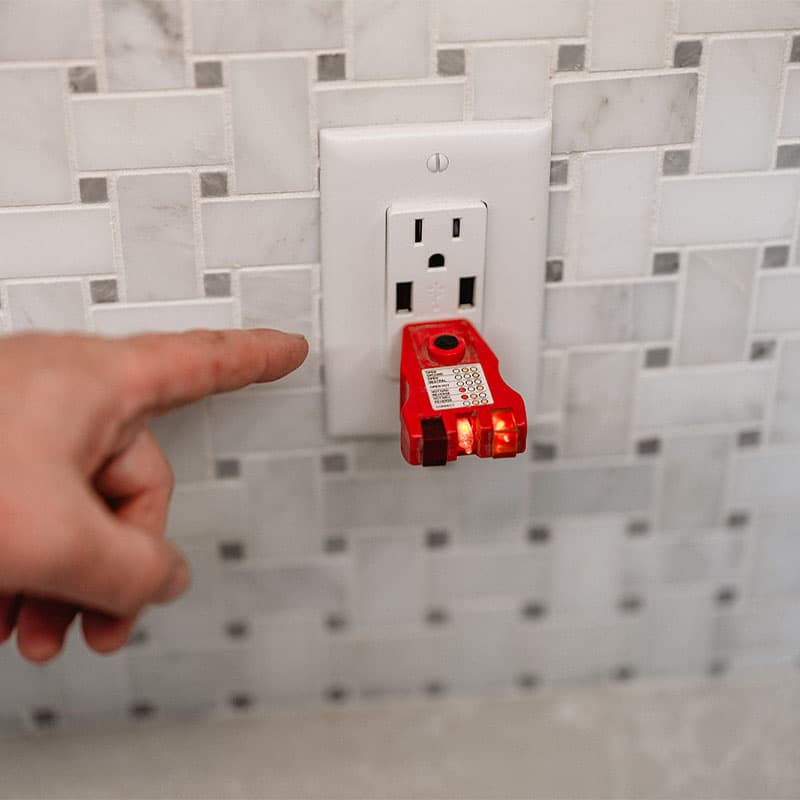
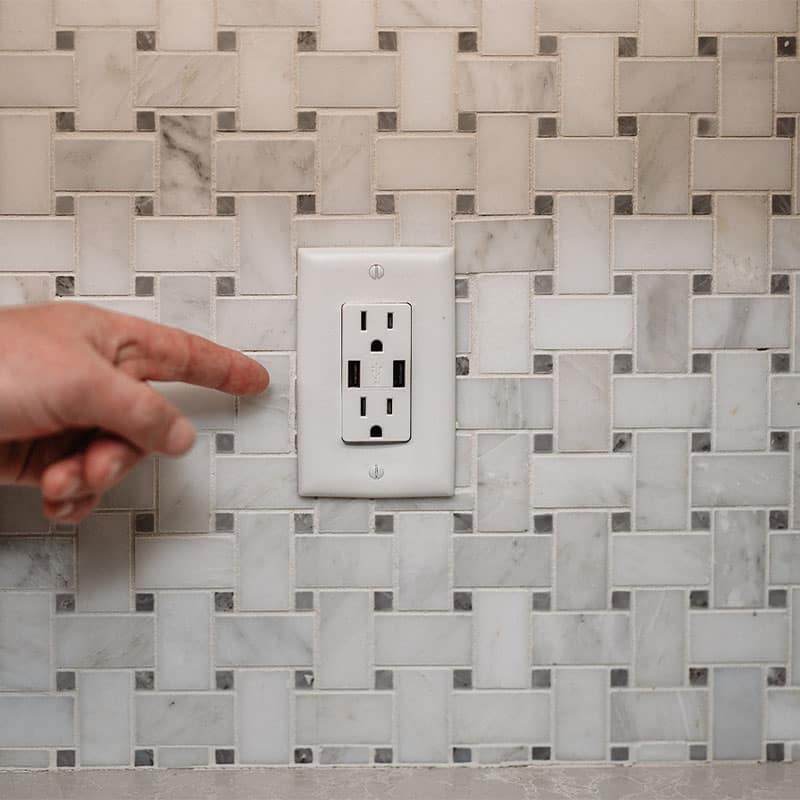
A loose or warm outlet is not a small thing
If a plug falls out of an outlet under its own weight, the internal contacts are worn and no longer gripping. That looseness creates resistance, resistance creates heat, and heat at a connection is how electrical fires start.
An outlet that is warm to the touch is more urgent still. The usual causes are a loose terminal screw, a push-in back-stab connection that has worked loose, or a receptacle at the end of its life. Aluminum branch wiring at a connection point and an overloaded circuit are the other two. None of those resolve on their own and all of them get worse.
If an outlet is warm, discolored, buzzing, or smells hot, stop using it, turn off the breaker feeding it, and call us. That is not an overreaction. It is the correct response.
Light Switch & Outlet Upgrade FAQs
We understand that many Twin Cities homeowners may have questions before scheduling their electrical switch and outlet service with us. Explore our FAQ section for clear answers and helpful information.
Don’t see your question here? Get in touch with our team to schedule an appointment and receive personalized guidance from a licensed electrician.
There can be a few reasons why some of your outlets might not be working, including:
Watch out for these signs that indicate it’s time to replace an electrical outlet:
Timing depends on whether we are replacing an existing device or running new cable. Wall type, distance from the panel, and attic or basement access also matter.
Here are typical time frames our Twin Cities electricians see:
Before work begins, we outline the plan and share a realistic work window for your home.
In many cases, yes. Our Twin Cities team keeps service vans stocked, so most common outlet and switch problems are handled the same day as your initial visit.
A GFCI cuts power when current leaks out of the circuit, which protects people from shock. An AFCI cuts power when it detects arcing, which protects the building from fire. They guard against different hazards, and code requires each in different locations. Dual-function devices do both.
Usually one of three things: an active fault on the circuit, a downstream device causing the trip, or a GFCI that has reached the end of its life. Our guide on outlet reset buttons walks through what to check. If it still will not hold, the circuit needs to be tested properly.
The right question is how much load the circuit carries, not how many devices are on it. Adding receptacles to a circuit that is already near capacity spreads the same power thinner and increases tripping. We assess the existing load before extending anything.
Often, yes. We work Monday through Saturday and are closed Sundays, and we prioritize outlets that are warm, sparking, or scorched. Call (763) 560-5600 and we will tell you the soonest we can be there.
Almost always a dimmer and lamp mismatch. Older dimmers were designed for incandescent loads and do not control LEDs cleanly. An LED-rated dimmer matched to your specific lamps fixes it, and we check compatibility rather than assuming.
Extending or altering branch circuit wiring generally requires a permit and an inspection, and electrical permits in Minnesota are administered by the state rather than the city. Minnesota enforces the 2026 National Electrical Code for permits filed on or after 17 August 2026. We handle the paperwork.
Upgrade to Reliable Switches & Outlets in Minneapolis-Saint Paul
From fixture swaps to dimmer upgrades, we keep everyday controls safe and simple. Expect a clear plan, respectful care for your home, and tested results. Contact us to schedule and receive transparent pricing from a friendly local team.
