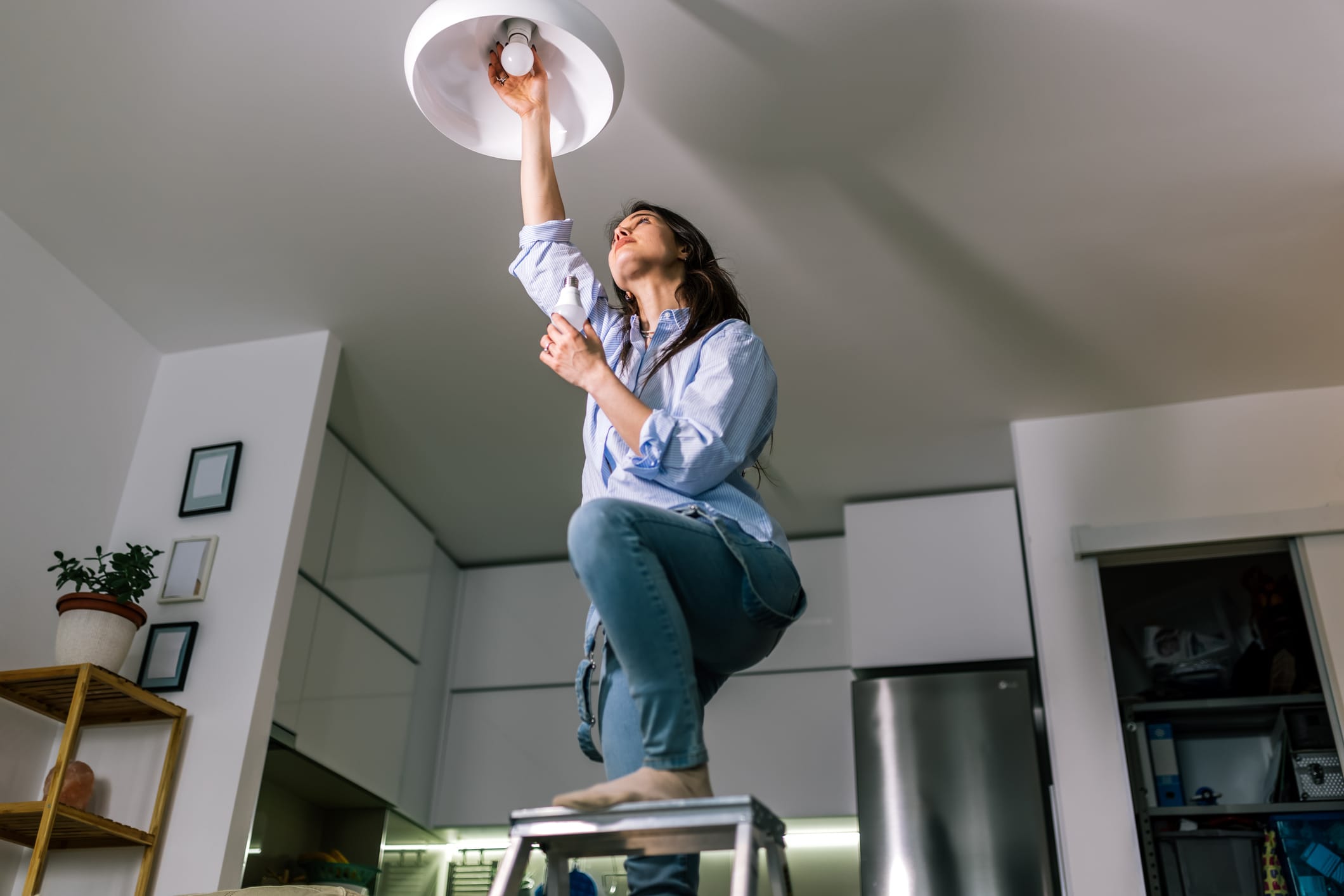
You’re microwaving leftovers, and the kitchen lights dip for a second. The air conditioner kicks on, and the lamp across the room flickers. Then it’s over, and everything looks normal again.
Flickering lights are one of those small household moments that can mean almost nothing, or point to something your electrical system needs. The tricky part is telling which one you’re dealing with.
Not every flicker is a red flag. But a few are, and knowing the difference can save you a service call or catch a real problem before it grows.
Quick Answer – Why Are My Lights Flickering?
- A brief flicker when a large appliance like the microwave or AC starts up is a normal voltage drop, not a wiring problem.
- Big appliances pull extra power the instant they turn on, briefly reducing voltage to anything sharing that circuit, including your lights.
- Flickering becomes a real electrical problem when it affects the whole house, comes with a burning smell, warm outlets, or breakers that trip often.
- If the dip is brief, tied to one appliance, and clears up fast, your system is doing what it’s built to do. If it’s spreading or getting worse, it’s worth calling a licensed electrician.
What’s Actually Happening When an Appliance Turns On
Every appliance needs a burst of electricity to start running. Large appliances need more than a burst. A microwave, air conditioner, space heater, hair dryer, or garbage disposal can pull several times its normal running current in that first second of startup.
That surge briefly pulls voltage away from anything sharing the same circuit, lights included. For a fraction of a second, your lights get less power than usual, so they dim or flicker before settling back to normal.
Electricians call this a voltage drop, and it’s the most common answer to why do my lights dim the moment a big appliance kicks on. It’s a matter of shared electrical load, not automatically a wiring failure.
When a Voltage Drop Is Normal
A quick dip is usually nothing to worry about if it:
- Lasts less than a second or two
- Happens with one specific large appliance
- Stays limited to the room or circuit that the appliance is on
- Clears up the instant the appliance finishes starting
- Doesn’t happen with smaller devices like a toaster or phone charger
If that matches what you’re seeing, you’re probably not dealing with a flickering lights electrical problem so much as normal behavior on a circuit doing exactly what it’s built to do.
When Flickering Points to Something Bigger
A few patterns suggest the flicker isn’t just your appliance flexing its startup muscle. It’s your electrical system telling you something.
An Undersized or Overloaded Circuit
Many Twin Cities homes were wired for a different era of appliances. A circuit built decades ago may now be asked to run a microwave, a coffee maker, and overhead lighting all at once. When too many electronics share one circuit, flickering shows up more often and more noticeably, not just during startup, and it may come with tripped breakers or warm outlets.
Loose or Aging Wiring Connections
Connections loosen over time at outlets, switches, and junction boxes, whether from age, temperature changes, or a rushed repair somewhere down the line. A loose connection creates resistance, and resistance shows up as flickering, along with heat at the connection point. This kind of wear is more common in older homes, but it can happen anywhere.
A Breaker Panel Reaching Its Limit
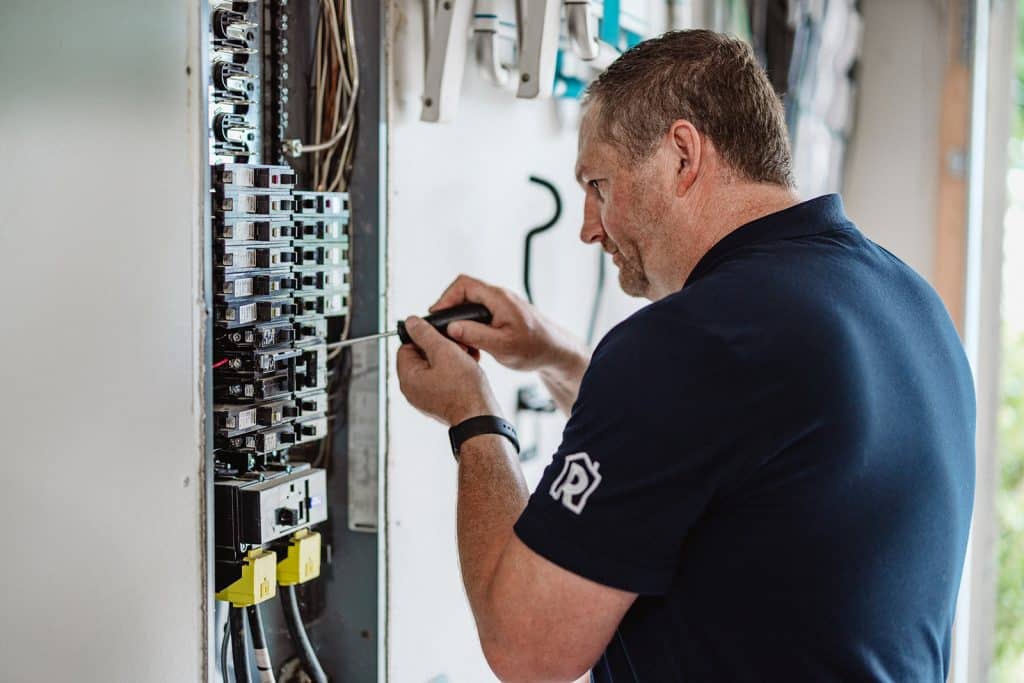
Your electrical panel distributes power to every circuit in your home. Panels built for a smaller electrical footprint can struggle once EV chargers, hot tubs, or major appliance upgrades enter the picture — flickering across several rooms at once, rather than just one, often points here.
Are Flickering Lights Dangerous?
Sometimes, yes. The flicker itself isn’t the danger. What it can point to is.
Consider having an electrician take a look if you notice:
- Flickering across the whole house, not tied to any single appliance
- A burning smell near an outlet, switch, or panel
- Warm or discolored outlets and switch plates
- Breakers that trip often
- Flickering that’s gotten more frequent or more noticeable over time
- Buzzing or crackling sounds from an outlet or the wall
According to the Electrical Safety Foundation International, these are classic warning signs of a wiring issue that can lead to overheating or fire if it’s left alone. None of that means one flicker is cause for panic. It means these particular signs are worth a professional look, sooner rather than later.
How Randy’s Can Help

Our licensed electricians diagnose flickering lights across Minneapolis, St. Paul, and the Twin Cities every week. We start by talking through when and where the flickering happens, then test the circuit, the connections, and the panel to find the actual cause rather than guessing at it.
From there, we’ll walk you through what we found in plain language and what it takes to fix it, whether that’s rewiring a section of the home, splitting an overloaded circuit, replacing worn circuit breakers, or a full panel upgrade. If the cause turns out to be something smaller, we’ll tell you that too. Upfront pricing means you’ll know the cost before any work starts, and you decide what happens next.
What Your Flickering Lights Are Trying to Tell You
A flicker here and there when the microwave starts is usually your home’s electrical system doing exactly what it’s supposed to do. A flicker that keeps showing up, spreads to other rooms, or comes with heat, smell, or sound is your system asking for a closer look.
If you’re not sure which one you’re dealing with, the team at Randy’s is here to help. Around the Twin Cities, folks know that Randy’s is Reliable, and a quick diagnosis now beats an unpleasant surprise later.
Get Your Flickering Lights Checked Out
If your lights are flickering more than they should, or you’re just tired of guessing why, our licensed electricians can find the actual cause and lay out your options in plain language. Schedule your flickering lights service today, and let’s get your home’s power running the way it should.