Why Circuit Breakers Keep Tripping: Key Takeaways
- Circuit breakers trip to cut power when a circuit pulls more current than its wiring can safely carry. It’s a safety feature doing its job.
- The most common causes are overloaded circuits, short circuits, ground faults, worn-out breakers, and aging electrical panels.
- An occasional trip that resets and stays on is usually minor. A breaker that trips often, won’t reset, feels hot, or smells like burning needs an electrician.
- To fix a tripped circuit breaker safely, unplug everything on that circuit, switch the breaker fully off, then back on. If it trips again right away, stop resetting it.
You’re halfway through drying your hair, or the basement space heater just kicked on, and that whole side of the house goes quiet. One flip at the panel and you’re back in business.
Until it happens again.
A breaker that trips once in a while is doing exactly what it was built to do. One that trips every week is trying to get your attention. Let’s walk through the usual suspects.
What Your Breaker Is Doing When It Trips
Every circuit in your home is rated to carry a set amount of current, usually 15 or 20 amps for standard household circuits. The breaker in your electrical panel watches that flow. When the current climbs past what the wiring can safely handle, the breaker snaps off before the wires have a chance to overheat.
So a trip isn’t the problem itself. It’s the breaker catching one. The question is what it caught.
Common Reasons Circuit Breakers Keep Tripping
An Overloaded Circuit
This is the most frequent answer to the question why do circuit breakers keep tripping. Too many things run on one circuit at once and pull more power than it’s rated for. Kitchens and bathrooms are repeat offenders: a microwave and toaster oven sharing a counter, or a hair dryer and curling iron on one outlet.
If your breaker trips when you use appliances, especially high-wattage ones, start here. Minnesota homes see this most in winter, when space heaters, heated blankets, and holiday lights pile onto circuits never meant to carry that much.
A Short Circuit
A short happens when a hot wire touches a neutral wire, sending a sudden rush of current through the circuit. Shorts usually trip the breaker instantly, sometimes with a pop, and may leave scorch marks or a faint burning smell. Damaged cords, loose connections, and faulty appliances are common causes.
A Ground Fault
A ground fault is similar, except the current escapes to the ground through a metal box, moisture, or, in the worst case, a person. These show up most in kitchens, bathrooms, basements, and garages, which is why those spaces use GFCI protection designed to trip at the first sign of trouble.
A Worn-Out Breaker
Breakers don’t last forever. After years of service or a long history of trips, the internal mechanism can weaken and trip at lower loads than it should. One that feels warm, buzzes, or won’t stay reset is likely past its prime.
An Aging or Undersized Panel
Plenty of older Twin Cities homes still run on 60- or 100-amp service, installed long before central air, EV chargers, and home offices. When several different breakers trip regularly, the panel may be struggling to keep up. Homes with an old fuse box face the same issue, often with fewer safeguards.
Is a Tripping Breaker Dangerous?
The trip itself isn’t dangerous; it’s what keeps a small electrical problem from becoming a big one. What deserves your attention is the reason behind it.
It’s time to call a licensed electrician if you notice:
- A breaker that trips immediately every time you reset it
- A breaker that won’t reset at all
- Trips that happen with nothing plugged into the circuit
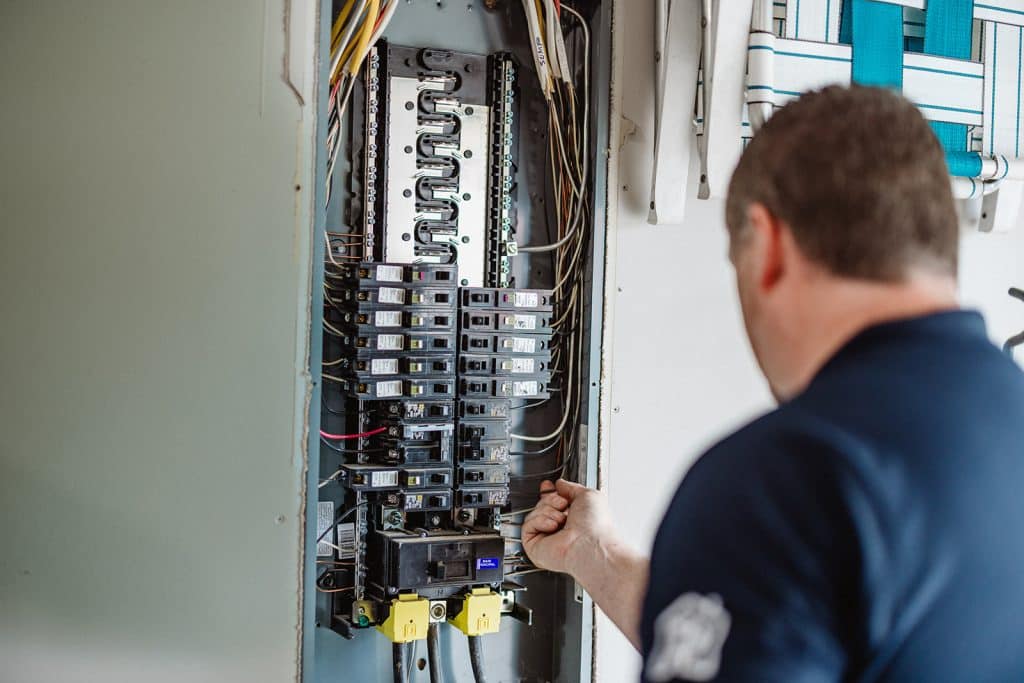
- Heat, buzzing, or crackling coming from the panel
- A burning smell or scorch marks near outlets or the panel
- Several different breakers are tripping regularly
The Electrical Safety Foundation International flags these same signs as indicators of a wiring problem that can lead to overheating or fire if left alone. One trip isn’t cause for alarm. A pattern is worth a closer look.
How to Fix a Tripping Circuit Breaker Safely
For a simple overload, a careful reset is usually all it takes:
- Turn off and unplug everything on the affected circuit.
- Find the tripped breaker in your panel. It often rests in the middle position rather than fully off.
- Push it firmly to OFF, then back to ON.
- Plug things back in one at a time. If the breaker trips when one particular appliance comes on, you’ve likely found your culprit.
- Spread high-wattage appliances across different circuits going forward.
If the breaker trips again with nothing plugged in, or the moment you reset it, stop there. Repeated resets on a faulty circuit wear down the breaker and stress the wiring behind it.
One more thing: never swap in a larger breaker to stop the trips. Breakers are sized to protect the wire they’re connected to, and a bigger one lets that wire overheat inside your walls without shutting off.
How Randy’s Electric & Plumbing Can Help

Our licensed electricians troubleshoot tripping breakers across Minneapolis, St. Paul, and the Twin Cities every week. We test the circuit, breaker, and panel to pinpoint the cause, then explain what we found in plain language.
Sometimes the fix is as simple as adding a dedicated circuit. Other times it means replacing worn circuit breakers, repairing damaged wiring, or upgrading a panel that’s run out of room. Either way, you’ll get upfront pricing before we start.
Noticing lights dimming too? Our post on flickering lights and voltage drops explains how the two often connect.
Reset Once, Then Pay Attention
A single trip after running the space heater and microwave together is your system working as intended. A breaker that keeps tripping, especially with heat, smell, or no obvious cause, means something behind the panel needs care.
You don’t have to guess which one you’re dealing with. Randy’s is reliable, and a quick diagnosis today beats a bigger repair down the road.
Let’s Get Your Breakers Back on Track
If your breakers trip more often than they should, our licensed electricians can track down the cause and walk you through your options with honest, upfront pricing. Get in touch with our circuit breaker team, and we’ll get your power running reliably again.