Your sump pump is running, but the water in the pit is not dropping. During a Minnesota winter, a frozen sump pump discharge line could be blocking the water’s path outside, even when the pump itself still works.
Knowing where that pipe goes, what warning signs to watch for, and when to get help can protect your basement without putting you in an unsafe situation.
The Quick Answer
A sump pump discharge line freezes when water gets trapped in a section exposed to freezing temperatures, or ice blocks the outlet. Prevention starts with a properly designed discharge route, drainage slope, an outlet clear of snow, and a compatible freeze-relief fitting where appropriate. If you suspect a blockage, monitor the pit from a dry location and contact a licensed plumber, especially if the water is rising. Never use an open flame to thaw the pipe.
Why Sump Pump Discharge Lines Freeze in Minnesota
The discharge line carries pumped groundwater away from your foundation. During sub-zero cold snaps, water left in an exposed or shallow section can freeze between pump cycles, gradually narrowing or blocking the pipe.
Winter does not always mean a dry sump pit. A warm spell, rain on snow, or groundwater movement can send water into the pit while the outdoor discharge route is still frozen.
Long Runs and Low Spots Hold Water
A long outdoor extension creates more opportunities for sagging, trapped water, and ice buildup. Flexible hoses are especially vulnerable when they dip into low spots or lie unevenly across frozen ground.
The outdoor portion needs an appropriate drainage slope for its design. A plumber should evaluate the route, pipe size, and pump capacity together rather than treating extra pipe length as a harmless addition.
Buried Lines Can Still Freeze
Burial alone does not make a discharge pipe freeze-proof. Shallow sections, poor grading, standing water, and the transition to an exposed outlet can all create trouble.
Minnesota frost depth varies with soil, weather, and site conditions, so there is no universal burial depth to recommend for every yard. A licensed plumber can assess the installation and local requirements.
Snow and Ice Can Block the Outlet
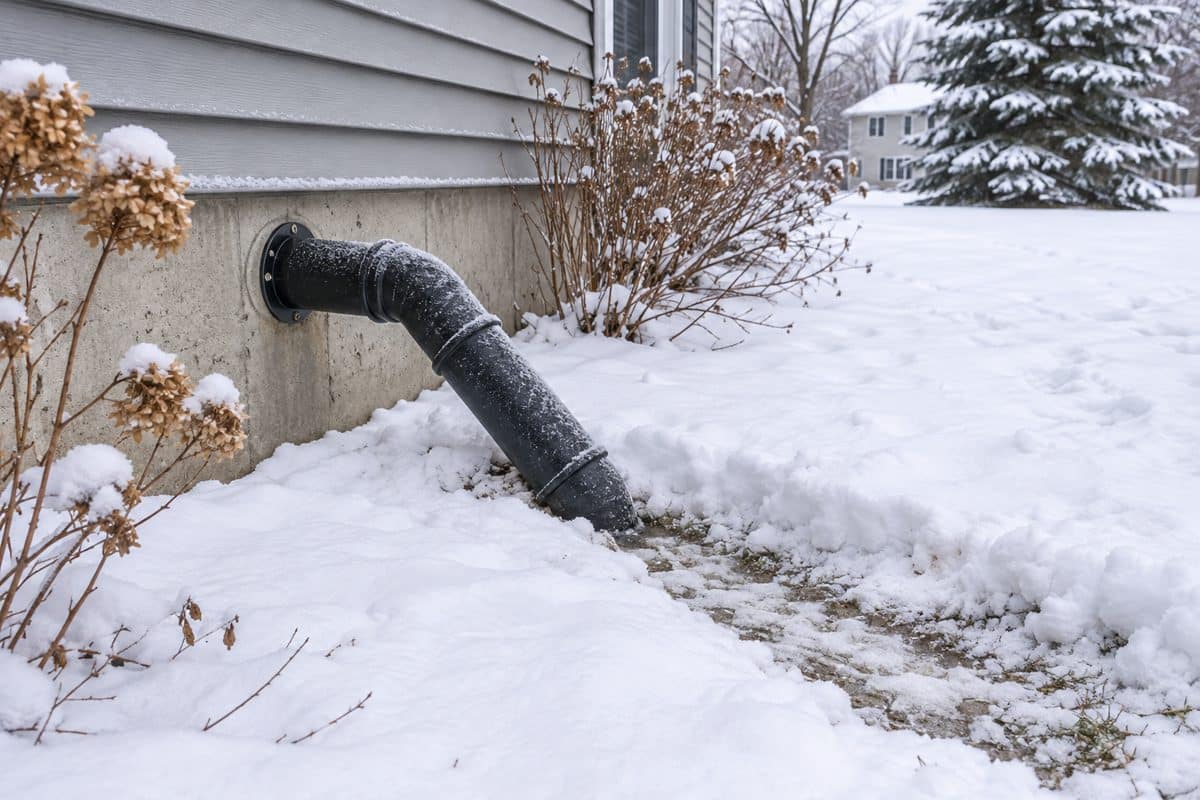
Snow piled over the opening can obstruct discharge, and pumped water may freeze into a mound that eventually closes the outlet. Snow cover can also hide a blockage from view.
Wind can cool an exposed pipe faster, but wind chill does not lower it below the actual air temperature. Sustained cold and water that cannot drain are the central concerns.
Warning Signs of a Frozen Discharge Line
Look for changes in how your pump operates, particularly after a sharp temperature drop. You do not need to dismantle anything to notice these signs:
- The pump runs continuously or much longer than usual. It may be pushing against a blocked discharge route.
- The water level keeps rising. The pump may not be removing water fast enough, or at all.
- Little or no water reaches the outdoor outlet. Check only if you can reach a safe viewing spot without crossing slippery ground.
- Ice surrounds the outlet. A growing ice mound or a visibly plugged opening needs attention.
- A high-water alarm sounds. Treat it as a reason to investigate promptly from a dry location.
These clues do not prove the discharge line is frozen. A stuck float, a failing pump, or another obstruction can cause similar symptoms. Our guide to signs your sump pump is failing explains other problems that may need inspection.
How to Help Prevent a Frozen Discharge Line
Have the Discharge Route Checked
A licensed plumber can check for sagging sections, poor slope, restrictive fittings, and an outlet that allows water to collect. The goal is to move water away from the foundation without leaving vulnerable pockets in the exterior piping.
Do not disconnect permanent piping, remove a check valve, or shorten the discharge route yourself. Those changes can affect pump operation or send water back toward your basement.
Ask About a Freeze-Relief Fitting
Some systems can use a purpose-built freeze-relief fitting, sometimes called an icy-weather fitting. It provides an alternate discharge opening if the downstream outdoor line becomes blocked.
This fitting does not thaw the pipe or prevent every freeze. It must be compatible with the installation, remain unobstructed, and release water where it will not create a foundation or walking-surface problem. Have a plumber select and install it.
Keep the Outlet Visible and Clear
After snowfall or plowing, check that snow has not buried the discharge opening. Clear loose snow around it from stable footing, without striking the pipe or chipping at attached ice.
Keep snow piles, leaves, and stored items away from the outlet and any freeze-relief openings. If ice is attached to the pipe or blocking its interior, leave removal to a plumber.
Do Not Rely on Insulation Alone
Insulation can slow heat loss, but it does not provide heat or correct trapped water. An insulated outdoor pipe can still freeze during prolonged cold.
Do not wrap a discharge line with improvised heating equipment or assume roof heat cable is suitable for it. Any heat-tracing approach needs professional review for pipe compatibility, outdoor electrical safety, and manufacturer instructions.
What to Do If Your Discharge Line Freezes
Focus first on your safety and the pit’s water level, not on forcing the ice out. A pump that runs against a blockage can overheat or become damaged.
- Observe from a dry location. Note whether the pump is running and whether the water is rising. Do not reach into the pit or touch wet cords, plugs, or equipment.
- Check the outdoor opening visually. If access is safe, look for snow cover or an ice plug. Clear only loose surrounding snow.
- Call a licensed plumber. Explain the pump’s behavior, the pit level, and any visible ice so the plumber understands the situation.
- Keep monitoring without entering water. Move nearby belongings only if you can do so safely on a dry floor.
If the pump is continuously running without lowering the water, ask the plumber for immediate guidance about shutting it down. Unplug it only if you can reach the plug from a dry location with dry hands, without touching wet equipment. Turning it off also stops water removal, so the rising-water risk still needs attention.
Never use a torch, open flame, boiling water, or improvised electrical heat to clear the line. Do not cut piping or force tools into the outlet. For rising water or active overflow, contact emergency plumbing services; do not enter standing water that could contact electrical equipment.
If household faucets have also stopped flowing, you may have a separate frozen supply pipe. Our frozen pipe repair service addresses that issue, which requires a different assessment from a blocked sump discharge.
Get Ready for the Spring Thaw
When warmer days arrive, melting snow can increase incoming water while buried ground and shaded outlet areas remain frozen. A previously quiet pump may suddenly cycle more often.
- Recheck the outlet after snowmelt and overnight refreezing.
- Have cracked, shifted, or sagging discharge piping inspected.
- Ask a plumber to test pump operation and inspect the float and check valve.
- Test high-water alarms according to their instructions, and discuss backup pumping options.
For a finished basement in the Twin Cities, an alarm can provide useful warning, but it cannot clear a blocked pipe. A battery backup pump also needs an open discharge path, so ask whether your primary and backup pumps share the same vulnerable route.
Need Help with a Frozen Sump Pump Discharge Line?
At Randy’s Electric & Plumbing, our licensed and insured team can assess the discharge route and explain appropriate next steps for your Minneapolis, St. Paul, or Twin Cities metro home. We provide upfront, project-based pricing with no hidden fees. Schedule sump pump service for help with a winter blockage, sump pump repair, or planning a sump pump installation.
Prefer to talk it through? Call (763) 560-5600.
Frequently Asked Questions
Yes. Underground sections can freeze if they are shallow, retain water, or connect to a frozen outlet. The installation needs an assessment of drainage, soil conditions, and local requirements, not just a deeper trench.
Continuous operation can mean the discharge is obstructed, the float is stuck, or incoming water exceeds what the pump can handle. Watch the water level from a dry location and arrange a plumber’s inspection if the pump is not lowering it. The sound of a running motor does not confirm that water is leaving the house.
Do not pour boiling water into the line or attempt to force water through a blockage. Added water can refreeze, and excessive heat can damage piping. A licensed plumber can determine how to thaw the affected section safely and check for damage.
A backup pump cannot push water through a fully blocked shared discharge route. Its usefulness during a freeze depends partly on how its piping is arranged. Have a plumber review both discharge paths rather than assuming backup power protects against an ice blockage.
A dedicated circuit is commonly recommended to reduce interruptions caused by other appliances, but the requirements depend on the pump instructions and applicable electrical code. A licensed electrician should check the circuit and required GFCI protection. Do not bypass protective devices or use an extension cord as a permanent power source.