

NFPA 70E Arc Flash Labeling For Twin Cities Businesses
Arc flash labeling is the process of marking panels, switchboards, disconnects, and other equipment that may be examined or serviced while energized with clear, current warning labels in line with NFPA 70E guidance. A licensed electrician reviews your equipment, confirms what each label should say, and applies labeling your staff and any outside contractors can trust.
This is not about selling you new equipment. A good labeling visit leaves your mechanical room, electrical closet, or back-of-house panel easier to work around safely, with documentation that matches what is actually installed.
Randy’s Electric & Plumbing has served the Twin Cities for 20+ years. Our electricians are licensed, and we schedule around your business hours so labeling work does not interrupt your operations.
Request A Quote

Why Businesses Call Us For Arc Flash Labeling
You cannot find a label on your panel. Equipment that was labeled years ago may have faded, been painted over, or never had a label applied in the first place. Staff and contractors opening that panel deserve to know what they are dealing with.
Your equipment changed, but the labels did not. A panel upgrade, a new disconnect, or added circuits can change the information a label needs to show. Outdated labels can be worse than no labels because they suggest a false sense of certainty.
You took over a building with unknown history. New property managers and business owners often inherit mechanical rooms and electrical closets with mismatched or missing labeling from past tenants and past electricians.
Your insurer or a safety consultant flagged it. Some carriers and safety programs ask for visible, current warning labeling on equipment that is serviced while energized, particularly in warehouses, restaurants, and facilities with mechanical or electrical rooms.
You have outside contractors in the building regularly. HVAC technicians, equipment installers, and maintenance crews who are not familiar with your panels rely on labels to know what they are approaching.
You are planning an electrical project. Panel upgrades, sub-panel additions, or equipment changes are a practical time to review and refresh labeling at the same time, rather than as a separate visit later.
Nobody can remember the last time labels were checked. Reason enough on its own, especially in older commercial buildings and multi-tenant properties.
What An Arc Flash Labeling Visit Actually Covers
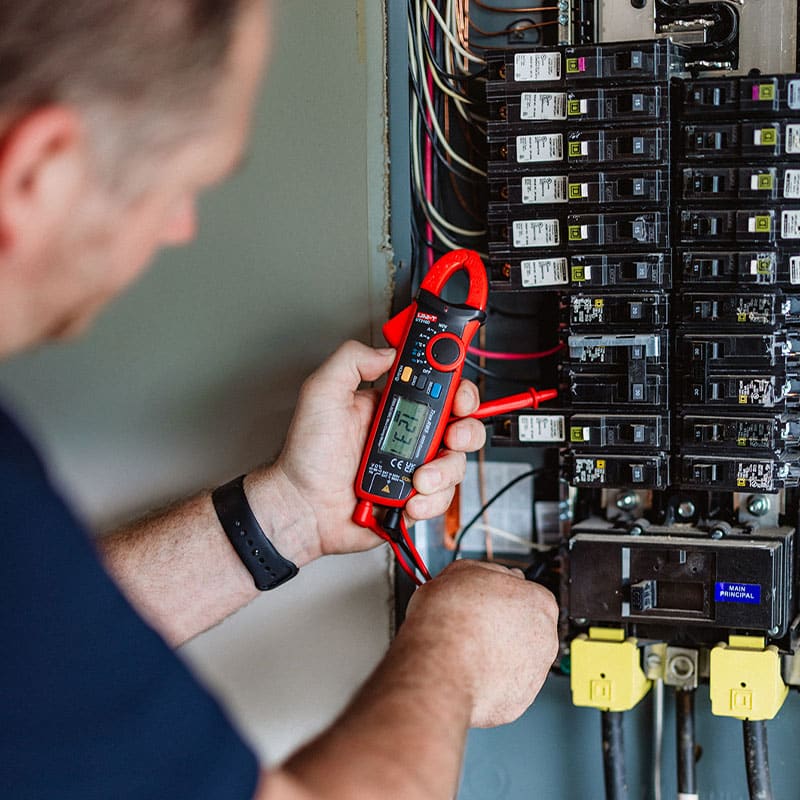
A labeling visit covers the equipment in your building that may be examined or serviced while energized, from the main service equipment down to individual disconnects.
What Arc Flash Labeling Does And Does Not Cover
Applying arc flash warning labels is one part of a broader electrical safety picture, and it is worth being clear about what labeling does and does not do on its own. A label communicates a warning on equipment that may be worked on while energized. It is not, by itself, a substitute for an engineered study where one is called for.
Some facilities, particularly those with larger or more complex electrical systems, require an engineered arc flash study and incident energy calculations performed by a qualified engineer before labeling can reflect accurate values. We do not perform that engineered study. If a walkthrough of your equipment suggests your facility needs one, we will tell you before we apply any labels, so you are not paying for labeling that would need to be redone.
For many commercial properties, the more common issue is simpler: labels that are missing, faded, generic, or no longer match the equipment after changes. That is where most of our labeling visits focus, and it is work we can usually complete in a single visit.
We will also tell you plainly when labeling alone will not satisfy a particular insurer or consultant’s request, so you know what you are working with before an inspection or audit.
Why Labeling Needs Vary From One Building To The Next
A small retail storefront with a single panel in a back closet has a very different labeling scope than a warehouse with multiple disconnects feeding separate equipment, or an office building with a shared electrical room serving several tenant suites. A restaurant kitchen often has equipment-specific disconnects near cooking lines that get overlooked during a general walkthrough, while a clinic or salon may have fewer panels but stricter expectations from staff and visiting contractors around clearly marked equipment.
Multi-tenant buildings add another layer, since panels serving different suites may have been labeled by different electricians over the years, in different styles, with different levels of detail. Bringing that labeling up to a consistent standard across the building is often as valuable as the labels themselves.
Scheduling A Labeling Visit
Call (763) 560-5600 or request a quote online. Tell us about your building, the equipment you are concerned about, and whether an insurer, consultant, or upcoming inspection prompted the call. We schedule around your business hours and coordinate with property managers and tenants as needed.
Randy’s Electric & Plumbing has been family-owned for 20+ years, serving offices, retail spaces, restaurants, warehouses, and other commercial properties across the Twin Cities. We also handle commercial plumbing, so if your facility is due for a broader walkthrough, we can look at more than just the panels.
Arc Flash Labeling FAQs
An arc flash labeling visit covers the equipment in your facility that may be examined or serviced while energized. A typical visit from Randy’s includes a close look at:
After the visit, your electrician explains what was found and which items, if any, need attention beyond labeling.For a single building with a handful of panels, plan on a few hours. Larger facilities, warehouses with multiple disconnects, or buildings with several tenant suites take longer. We will give you a realistic window once we understand the scope of your equipment.
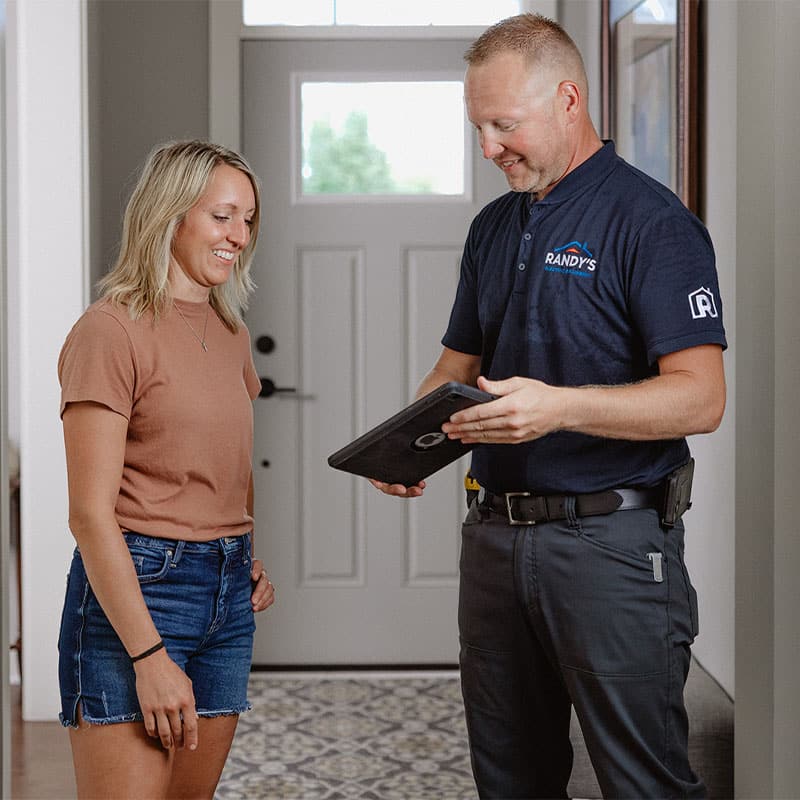
It helps. A facility manager or maintenance staff member who knows the building can point us toward equipment that has changed recently or areas that are hard to access, and being there means we can walk through findings in person. Access to mechanical rooms, electrical closets, and any locked equipment areas is necessary.
You do not need to do much, but a little preparation helps the visit go smoothly.
Before your labeling visit, try to:
If something is hard to reach or you are not sure where it is, do not worry. Your Randy’s electrician can help locate it during the visit.Yes. We provide a written summary identifying equipment reviewed, labeling applied or updated, and any items flagged for further attention, which is generally what carriers and safety consultants ask for. Tell us the documentation is for an insurer or consultant when you schedule so the summary is written accordingly.
Often, yes. If we find a faded or missing label on a panel or disconnect, we can usually apply or replace it during the same visit if you approve the work.
For larger issues, such as equipment that needs an engineered study, a panel that needs correction, or a directory that needs a full rebuild, we will explain what is needed, provide pricing, and schedule a follow-up appointment. Our goal is to handle straightforward labeling right away and give you a clear plan for anything that needs more time.
Across offices, retail spaces, restaurants, and warehouses in the Twin Cities, we see a few recurring labeling issues. Common problems include:
Before scheduling, asking a few questions can help you understand what to expect. Helpful questions include:
You can also mention if you have specific concerns, such as recent equipment changes, an upcoming inspection, or tenant areas that need attention. This helps us tailor the visit to your building before we arrive.No. An electrical safety audit looks broadly at your building’s electrical system and condition. Arc flash labeling focuses specifically on applying and updating warning labels on equipment that may be worked on while energized, and it is often one part of a broader audit.
Labeling alone does not make a facility compliant on its own. It addresses one part of a broader electrical safety picture. If your equipment calls for an engineered arc flash study, we will tell you before labeling, and we can discuss other steps worth considering alongside labeling.
Yes. We do not perform engineered arc flash studies or incident energy calculations ourselves, but if a walkthrough of your equipment suggests your facility needs one, we will tell you clearly before applying any labels, so you can plan for that separately.
Schedule Arc Flash Labeling With Randy’s
Missing, faded, or outdated labels are easier to correct before an inspection, an insurance review, or a contractor visit turns them into a bigger concern. A licensed Randy’s electrician can walk your building, explain what is labeled and what is not, and give you a clear plan for what is next. Schedule arc flash labeling today for your Minneapolis or St. Paul property.
